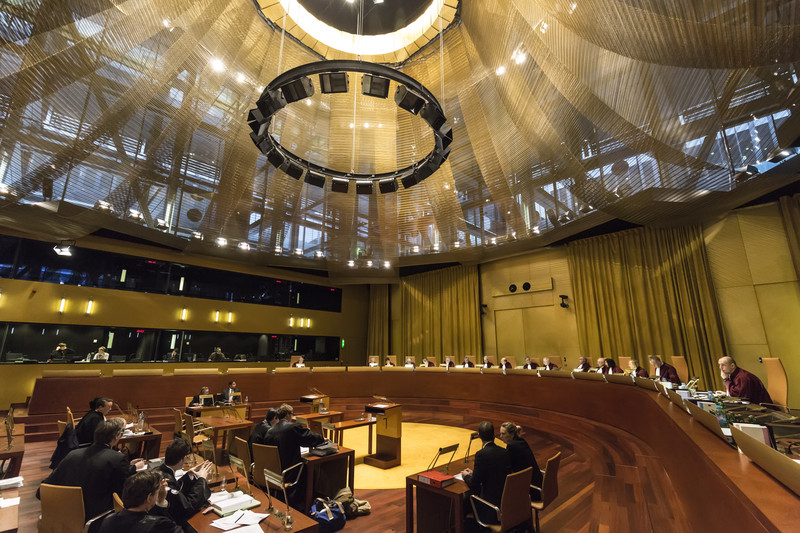
On the one hand, the European Arrest Warrant has been a remarkable success, enabling the authorities in any EU nation state to issue an arrest warrant which can be used anywhere in the EU. One of the notable success was the arrest of the people involved in the London tube bombings in 2005, and it’s widely seen as important in the fight against terrorism.
But an arrest warrant also needs some sort of judicial context so that it is possible to appeal against its mis-use. There are bi-lateral extradition agreements between countries, which need to specify where which courts have jurisdiction, but rather than the confusion of multiple bilateral agreements, the European Arrest Warrant provides for this through the Court of Justice of the European Union.
Withdrawl from the jurisdiction of the Court of Justice of the European Union is (apparently) one of the British government’s “red lines” in talks over Brexit. Michel Barnier has bluntly pointed out that he is willing to recognise the UK’s “red lines” and wishes the UK would do the same.
Continue reading “European Arrest Warrant — the UK ignoring its own “red lines””







 On the face of it the idea is simple: repeal the 1972 European Communities Act, which provided a mechanism to bring into UK law things emerging from the EU, and shift all EU-derived law into British law. British and EU law have been so intertwined for so long that simply repealing everything would create some big holes, so this could be seen as a pragmatic solution. It means that on the day after leaving the EU, UK law would be in the same place that it was the day before.
 So far, so bad. There is grief and there is anger. At the time of writing this, it’s not clear whether the fire was a result of building regulations not being followed, or not being sufficient to ensure fire safety. Whatever the actual cause, many people have died nasty deaths.